The Role of Blockchain in Digital Services: Benefits, Use Cases, and Web Development Considerations

Blockchain technology is changing how digital services verify information, transfer value, and establish trust between organizations and users. Instead of storing every record in one central database, blockchain can distribute selected records across a network and make updates verifiable.
For businesses, the opportunity is broader than cryptocurrency. Blockchain-enabled web development services can support trusted identities, automated agreements, ownership records, secure payments, and decentralized applications. The right approach depends on the service, the data involved, and the users’ needs.
What Is Blockchain and How Does It Support Digital Services?
Blockchain is a distributed ledger that records transactions across a network, while cryptographic validation helps participants verify that records have not been altered. In digital services, this structure can create a shared source of truth for events that multiple parties need to trust.
A conventional web application usually relies on a central server and database controlled by one organization. That model remains efficient for many products. A blockchain architecture adds a verification layer in which transactions are grouped into blocks, confirmed according to network rules, and linked to earlier records.
Blockchain does not automatically make every type of data private or accurate. It helps preserve the history of information after the network accepts it, but incorrect data entered at the start can still remain incorrect. This is why blockchain projects require careful identity, permissions, and data-entry design.
In practice, a web application may use blockchain only for essential proofs or transactions. User profiles, search indexes, images, and other large files can remain in conventional databases or external storage, while the blockchain stores hashes, ownership claims, approvals, or payment events. This hybrid model often offers a better balance between performance and verifiability.
Key Benefits of Blockchain for Digital Services
Blockchain benefits digital services by improving record transparency, tamper resistance, automated execution, and trust between parties that do not share one database. These benefits matter most when verification is costly or disputes are common.
- Transparency: Authorized participants can inspect a consistent transaction history instead of reconciling separate records.
- Tamper resistance: Cryptographic links and consensus make unnoticed alteration more difficult, although no system eliminates every security risk.
- Decentralized data management: A service can reduce dependence on a single database operator or intermediary.
- Automation: Smart contracts can execute predefined actions when stated conditions are met.
- Data ownership: Users may receive greater control over credentials, assets, or permission records through digital identity and tokenization.
- Auditability: Time-stamped events can simplify investigations, compliance reviews, and partner reconciliation.
These advantages involve trade-offs. Choosing blockchain for shared verification means accepting additional transaction costs, platform dependencies, and operational complexity. A centralized database may deliver faster queries and simpler data correction. The useful question is therefore not whether blockchain is modern, but whether its verification model solves a real service problem.
Blockchain can also improve trust without exposing every piece of user information. For example, a service could verify that a credential is valid without publishing the user’s full personal record. Achieving that result requires privacy-preserving design, access controls, and compliance review rather than blockchain alone.
Practical Blockchain Use Cases in Web Development
Blockchain use cases in web development include digital identity, secure payments, supply chain portals, content ownership, loyalty programs, and decentralized applications. Each use case works best when several independent parties need reliable verification or automated settlement.
Digital identity and verifiable credentials
A web service can use blockchain to register or verify claims about identity, qualifications, licenses, or membership. Users may hold credentials in a compatible wallet and present proof when needed. The application checks validity without requiring every provider to maintain a duplicate identity database.
Privacy must guide the implementation. Personal information should generally remain off-chain, with the ledger storing a proof, status, or revocation reference. Businesses also need recovery processes for lost devices and procedures for correcting outdated credentials.
Payments and financial workflows
Blockchain can support programmable payments, escrow, cross-organization settlement, and transaction histories. A marketplace, for instance, could release payment after a delivery event is confirmed by agreed data sources. The benefit is traceable logic; the limitation is that payment rules, legal obligations, and dispute handling still require human governance.
Supply chain and business portals
Manufacturers, logistics providers, and retailers can share shipment milestones or product certificates through a distributed ledger. A customer-facing portal may display a product’s verified journey, while partners use API and blockchain integration to submit updates. The system is only as reliable as the organizations and devices supplying those updates.
Content ownership and loyalty programs
Tokenization can represent access rights, membership benefits, event tickets, or digital content licenses. A media platform might record a creator’s ownership claim and automate royalty rules. A loyalty service could issue transferable or non-transferable rewards while keeping balances auditable. Legal terms, consumer protection, and straightforward redemption matter more than the token itself.
The Role of Smart Contracts and Decentralized Applications
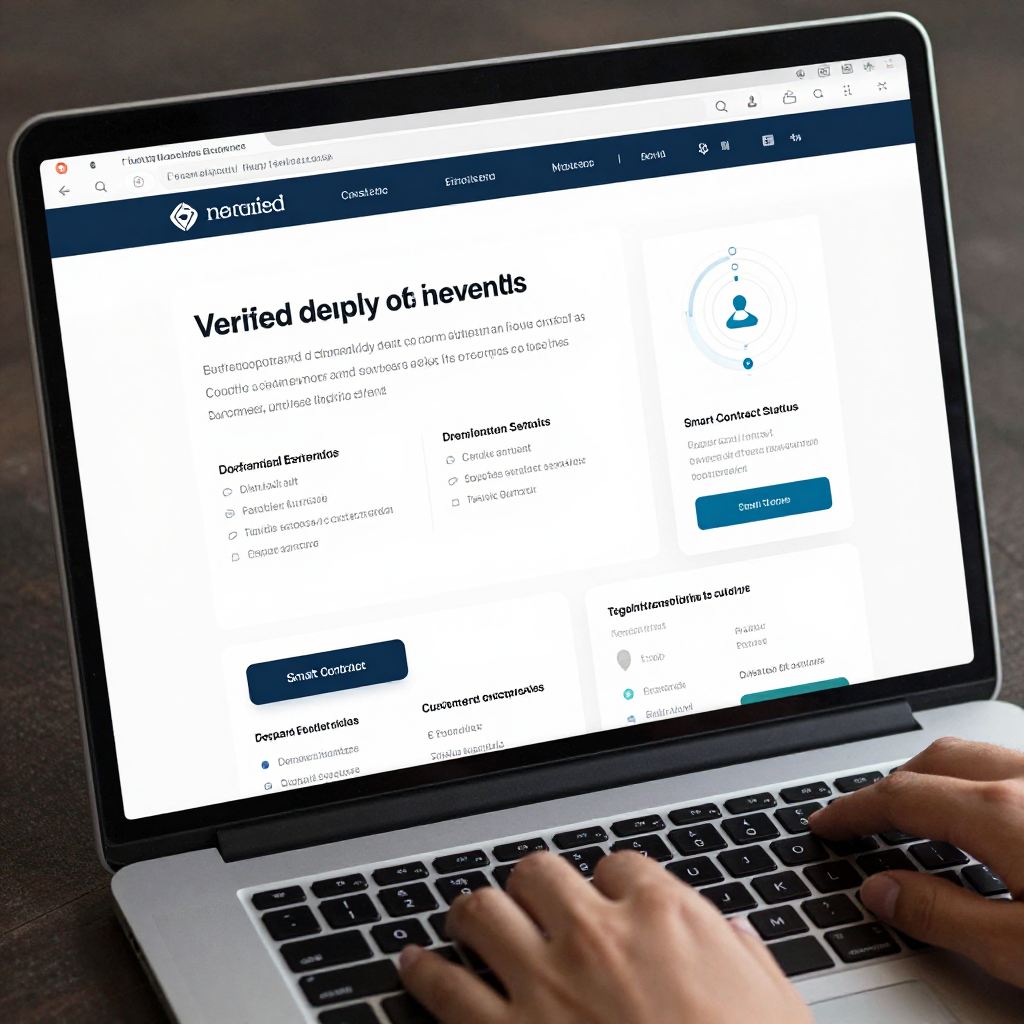
Smart contracts are blockchain-based programs that execute predetermined rules, while decentralized applications, or dApps, use blockchain networks as part of their core service logic. Together, they can reduce manual coordination when conditions are clear and measurable.
A conventional application may store an order in a company database and ask an administrator to approve payment. A dApp could call a smart contract that checks specified conditions and records the outcome on-chain. The front end may still look like an ordinary website, but its transaction flow and ownership model differ underneath.
Smart contracts are effective for rules such as “release funds after two authorized confirmations” or “issue a credential when the required approval is recorded.” They are less suitable for ambiguous judgments, changing policies, or decisions based on unverified real-world data. External information usually enters through an oracle or API, creating another point that developers must secure and govern.
Successful dApp development also requires wallet connections, transaction signing, network-fee messaging, failed-transaction handling, and account recovery guidance. Users should understand when an action is irreversible and when a web application is simply reading public blockchain data. Good product design hides unnecessary complexity without hiding meaningful risk.
Challenges of Using Blockchain in Digital Services
The main blockchain challenges are scalability, integration complexity, regulatory uncertainty, user experience, maintenance, and unsuitable on-chain data storage. Addressing these issues early prevents an expensive proof of concept from becoming an impractical product.
- Scalability: Some networks process fewer transactions or confirm them more slowly than centralized infrastructure. Layer-2 networks, batching, caching, and off-chain workflows may help, but each adds design decisions.
- Integration: API and blockchain integration must connect wallets, nodes, identity systems, payment providers, analytics, and existing enterprise software.
- Compliance: Privacy laws, financial regulations, consumer rights, and data-retention obligations may conflict with permanent public records. Legal review belongs in the architecture phase.
- User experience: Wallet setup, seed phrases, network fees, and rejected transactions can discourage mainstream users. Account abstraction or managed custody may simplify access, but it changes the trust model.
- Maintenance: Smart contracts are difficult to modify after deployment. Audits, monitoring, incident response, dependency management, and upgrade controls are essential.
- Data design: Sensitive personal data should rarely be placed directly on a public ledger. Store only what needs independent verification and keep large or private content elsewhere.
Security also deserves a precise definition. Blockchain can protect ledger integrity, but it cannot prevent compromised wallets, flawed smart contracts, malicious administrators, insecure APIs, or inaccurate real-world inputs. A complete data security program must cover the whole application stack.
How to Plan a Blockchain-Enabled Web Development Project
To plan a blockchain-enabled web development project, start with the business problem, define what must be verifiable, choose the architecture, integrate services securely, test the full user journey, and prepare ongoing support. Technology selection should follow these decisions.
- Analyze requirements: Identify the participants, disputed events, ownership questions, approval workflows, and data that must remain private. Ask whether multiple organizations truly need a shared record.
- Choose the platform: Compare public, private, and permissioned blockchains by transaction capacity, fees, governance, tooling, privacy, developer availability, and long-term stability.
- Design the architecture: Separate on-chain records from application databases, file storage, identity providers, and analytics. Define the source of truth for every important field.
- Plan API integration: Specify how the web application communicates with blockchain nodes, wallets, payment systems, enterprise software, and data oracles. Include retries, confirmation states, and failure recovery.
- Build security controls: Use code review, threat modeling, key management, permission testing, dependency scanning, and independent smart contract audits where the risk justifies them.
- Test usability: Test account creation, signing, rejected transactions, network changes, lost access, refunds, and support scenarios with nontechnical users.
- Prepare operations: Monitor contract events, transaction failures, infrastructure health, suspicious activity, and platform changes. Define who can pause or upgrade a service and under what conditions.
A capable blockchain development partner should explain what belongs on-chain and what should not. Ask for an architecture diagram, security process, deployment plan, support terms, and examples of comparable integrations. A polished demonstration is useful, but production readiness depends on governance and operations.
Is Blockchain Right for Every Digital Service?
Blockchain is appropriate when several parties need a verifiable shared record, users require portable ownership or credentials, or smart contracts can automate valuable transactions. A conventional web application is usually better when one trusted organization controls the data and fast, private updates matter most.
Use this decision filter before commissioning blockchain web development services:
- Are there multiple organizations or users that need to trust the same record?
- Would an independent audit trail reduce disputes, fraud, or reconciliation work?
- Does the service need portable identity, asset ownership, or programmable settlement?
- Can the important business rules be expressed clearly enough for software to execute?
- Can privacy, correction, compliance, and account recovery be handled responsibly?
- Do the expected benefits justify network fees, integration work, support, and user education?
If most answers are no, a conventional database with strong access controls may deliver more value. If the answers are yes, begin with a focused workflow rather than putting the entire product on-chain. A pilot should measure verification time, reconciliation effort, transaction success, user completion rates, and operating cost.
Frequently Asked Questions About Blockchain in Digital Services
What types of digital services benefit most from blockchain?
Services involving shared records, digital identity, asset ownership, programmable payments, supply chain verification, and multi-party approvals often benefit most. Private single-organization workflows may not need it.
How does blockchain improve data security in web applications?
Blockchain can strengthen integrity by making accepted records difficult to alter unnoticed. It does not replace encryption, secure authentication, API protection, backups, privacy controls, or smart contract testing.
What is the difference between a blockchain application and a traditional web application?
A traditional application usually relies on a central database controlled by one provider. A blockchain application uses a distributed ledger for selected records or transactions, often with wallets, cryptographic signing, and smart contracts.
How much blockchain integration is needed for a digital service?
Only the functions that need shared verification or programmable ownership should use blockchain. User interfaces, search, private data, and large files can often remain in conventional systems.
What should businesses consider before hiring a blockchain development partner?
Evaluate experience with web applications, API and blockchain integration, smart contract security, digital identity, privacy-aware architecture, testing, compliance coordination, and post-launch maintenance. The partner should be willing to recommend a non-blockchain solution when it is more suitable.
Blockchain has a valuable role in digital services, but it is an architectural choice rather than a universal feature. When applied to a genuine trust, ownership, or automation problem, it can make web products more verifiable and resilient. When added without that need, it can introduce cost and complexity without improving the user experience.